How to Choose a Cremation Urn: A Practical Guide

Choosing a cremation urn does not need to begin with material, color or decoration. Start with what will happen to the ashes, then choose the capacity, dimensions and opening that support that plan.
There is no single correct arrangement. An urn may be kept at home, placed in a columbarium, buried, used before scattering, or divided into smaller memorials for family members. Each choice changes what matters most in the urn itself.
Start with How the Ashes Will Be Kept
For home display, most permanent urn materials—including wood, metal, cloisonne, ceramic and stone—can be suitable. The practical considerations are stability, external dimensions and how the material should be cared for indoors.
A columbarium niche places firmer limits on size. Measure the niche’s internal width, depth and height, but also obtain the dimensions of its entrance. An urn may fit inside the niche while still being too wide to pass through its opening.
For cemetery burial, a conventional permanent urn can often be used inside an urn vault. Some cemeteries require a vault to support the ground above the urn, while others allow different arrangements. This is a cemetery policy rather than a single nationwide rule.
If the ashes will be scattered, a lightweight container with a wide, easily controlled opening is usually more practical than a heavy display urn with several base screws. For water burial, use a container specifically designed to break down in water rather than assuming that every biodegradable urn is suitable.
If the ashes will be shared, keepsake urns and cremation jewelry are made to hold smaller portions. A full-size urn can hold the main portion while several smaller memorials are prepared for family members.
A funeral home or crematory can usually transfer the ashes into the chosen urn. In the United States, families may also provide an urn purchased elsewhere. Under the FTC Funeral Rule, a funeral provider cannot refuse to handle the urn or charge an additional fee simply because it was purchased online or from another seller.
Match Capacity with the Space Available
Urn capacity and external size answer two different questions. Capacity determines whether the ashes will fit inside. External dimensions determine whether the urn will fit on a shelf, inside a niche or within an urn vault.
A practical starting guideline is approximately one cubic inch of capacity for each pound of body weight before cremation. A 180-pound adult would therefore generally require at least 180 cubic inches. Standard adult urns commonly provide approximately 200 cubic inches or more, and choosing some additional capacity is normally not a problem.
The amount produced by cremation can vary, so the crematory can provide the actual volume when it is available. Families selecting an urn before the cremation can use the weight guideline and choose the next suitable capacity rather than selecting an urn that is only just large enough.
When the urn must fit a fixed location, compare all three external dimensions—not only capacity. Include any stand, projecting lid or base in the measurement. Our Cremation Urn Size & Capacity Guide provides more detailed sizing information without requiring you to calculate everything from the outside measurements.
Choose the Material and Closure Together
Material affects weight, care, personalization and the way an urn can be constructed.
- Wood: Well suited to home display and columbarium placement. It often supports direct laser engraving. Full-size wooden urns commonly use a bottom-loading panel secured with screws.
- Metal: Durable and available in many forms. Depending on the design, access may be through a threaded top or bottom opening.
- Cloisonne: Built on a metal body with kiln-fired enamel. Full-size designs often use a threaded top lid, while smaller keepsake designs may open from the bottom. Direct engraving is normally avoided because it can damage the enamel surface.
- Ceramic: Suitable for indoor display and sculptural designs, but it requires more careful handling. A threaded or plugged bottom opening is common.
- Marble and stone: Stable and substantial, but heavier than many alternatives. Bottom access is common, and the total weight and external dimensions deserve particular attention.
These are common construction patterns rather than rules for every urn. The opening listed on the individual product page is the one that applies to that design.
Why the Opening Deserves Attention
Most families will not need to open an urn regularly. For permanent home display or columbarium placement, a secure threaded lid or screw-fastened base is usually more important than quick access.
For scattering, the opposite is true. An opening should be easy to reach and wide enough to allow a controlled release. A decorative urn that requires the removal of several base screws may be secure, but it is not always the most convenient scattering vessel.
If the family will transfer the ashes at home, a wider opening is generally easier to work with than a narrow one. The ashes may arrive inside a temporary container or sealed bag, so determine whether that container will be placed inside the urn or whether the contents will be transferred directly.
Cremation jewelry uses smaller openings because it holds only a symbolic portion. Depending on the pendant, the chamber may open through the top bail, bottom, side or back. Many threaded designs include a rubber gasket. Keep the threads and gasket clean, add only a small amount, and never force the closure. Our cremation jewelry filling guide explains the process in detail.
No closure is automatically best for every product. The appropriate design is one that holds the contents securely, remains understandable to the person using it and does not interrupt the intended exterior form.
When Families Want to Keep More Than Ashes
Some families want to keep a photograph, letter, ring, medal or another small object near the ashes. A dual-compartment urn can provide a separate space for these items rather than placing them directly inside the ash chamber.
In both the Pure Solid Walnut Urn and the Dual-Layer Walnut Cremation Urn, a removable upper compartment holds personal keepsakes. Lifting this section provides access to the ash chamber below.
Hidden strong magnets hold the upper structure securely in place without visible hinges, latches or tools. This keeps personal objects separate from the ashes while allowing both compartments to remain within one consistent exterior form.
Add Personalization Only Where the Material Allows
Wooden urns often provide a clear surface for names, dates, short messages or selected artwork. Some metal and stone products can also be engraved, depending on their finish and construction.
Decorative ceramic and cloisonne surfaces are generally not suitable for direct engraving. A separate engraved pendant, tag or plaque can add personalization without cutting into the finished surface.
Short inscriptions are usually clearer than long quotations. Before submitting an order, review spelling, dates, capitalization and punctuation, because engraving cannot normally be corrected without remaking the personalized component. The available methods are explained on our Memorial Engraving & Personalization page.
Before Ordering, Check These Ten Details
- Will all the ashes remain together, or will a portion be shared?
- Will the urn be displayed, placed in a niche, buried or used for scattering?
- Does the urn provide enough internal capacity?
- Will its external dimensions fit the intended location?
- Does a cemetery require an urn vault?
- Is the opening suitable for permanent storage, transfer or scattering?
- Will the funeral provider or the family transfer the ashes?
- Is the material suitable for the planned environment?
- Can the selected surface support the requested personalization?
- Do production and delivery times allow for a scheduled service?
Also review the return conditions before placing ashes inside. Personalized items and products that have held cremated remains normally cannot be returned.
Start with the intended use, capacity and physical fit. Then consider material, closure and personalization. This order removes the practical uncertainty first and leaves the final design choice with the family.
You can compare available capacities, materials and opening styles in the Royal Memorials cremation urn collection.
Related Blogs

New Cremation Jewelry Designs Are Now Available
In August, we shared an early look at several new memorial jewelry designs that were being prepared for the Royal
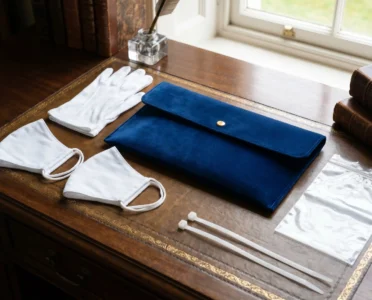
Ceremony Care Kit : Every Detail Thoughtfully Cared For
Practical Accessories for Safe Handling of Cremation UrnsWhen choosing a cremation urn for a loved one, many families are already
Real Customer
Reviews
Caring
Help
Fast & Free
Shipping
Same Day
Engraving
Make it
Personal
Real Customer
Reviews
Caring
Help
Fast & Free
Shipping
Same Day
Engraving
Make it
Personal